.svg)

What can I spend my aged care package on?
Read this to find out what you can and can't spend your Home Care Package on to make the most of your aged care funding.
Author: Sensible Care

Your Home Care Package can fund services in your care plan that are approved by your provider. It can't cover general living costs or services funded by other programs. Rules will shift with the Support at Home Program from 1 November 2025, so check eligibility with your provider beforehand.
Understanding Australia's aged care system can be confusing, especially when you're not sure what you can actually spend your funds on.
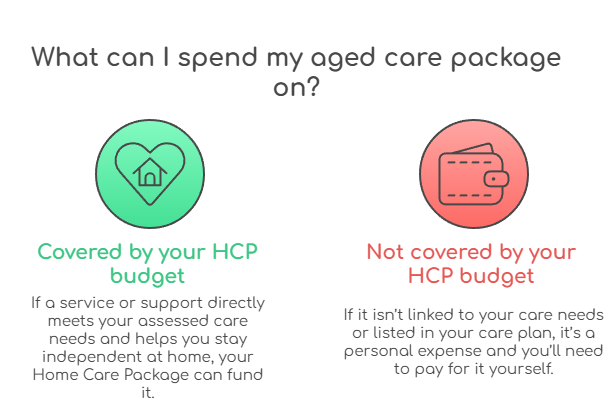
To make it simple, consider this: Does the service directly affect your aged care needs and your ability to live at home on your own?
If so, it's most likely covered by your Home Care Package. However, other expenses, like utilities and entertainment costs, are not usually covered.
At Sensible Care, we want to help you get the most out of your aged care package funding, and that's why we've written this guide. You'll find everything you need to know about what can be included in a Home Care Package in this article.
Understanding your aged care package funds
The Home Care Package program helps older Australians stay independent, safe, and comfortable in their own homes.
It provides funding based on assessed care needs, managed through an approved provider like Sensible Care.
There are four levels of Home Care Packages, each offering a different subsidy amount and intensity of support:
The government pays your provider directly, and the provider helps you manage services within your budget and care plan.
Subsidy rates are indexed regularly to reflect wage increases and cost adjustments. The current rates reflect a 0.5% increase effective 1 October 2025.
Why does this matter?
Every dollar in your package must be spent on supports that meet your assessed care needs. Spending must align with your care plan and government guidelines. This protects you, your provider, and the integrity of the Home Care Package program.
What can Home Care Package funds be used for?
You can spend your Home Care Package funds on services, equipment, and supports. These must relate to your care needs and should be listed in your care plan.
You can't use package funds for general living costs, entertainment, or items covered by other government programs.
What counts as eligible spending?
Your package funds can cover a wide variety of services and supports that help you stay healthy, safe, and independent. But they must:
- Relate to your assessed aged-care needs and be in your care plan.
- Be purchased or arranged through your approved provider, who will check your eligibility.
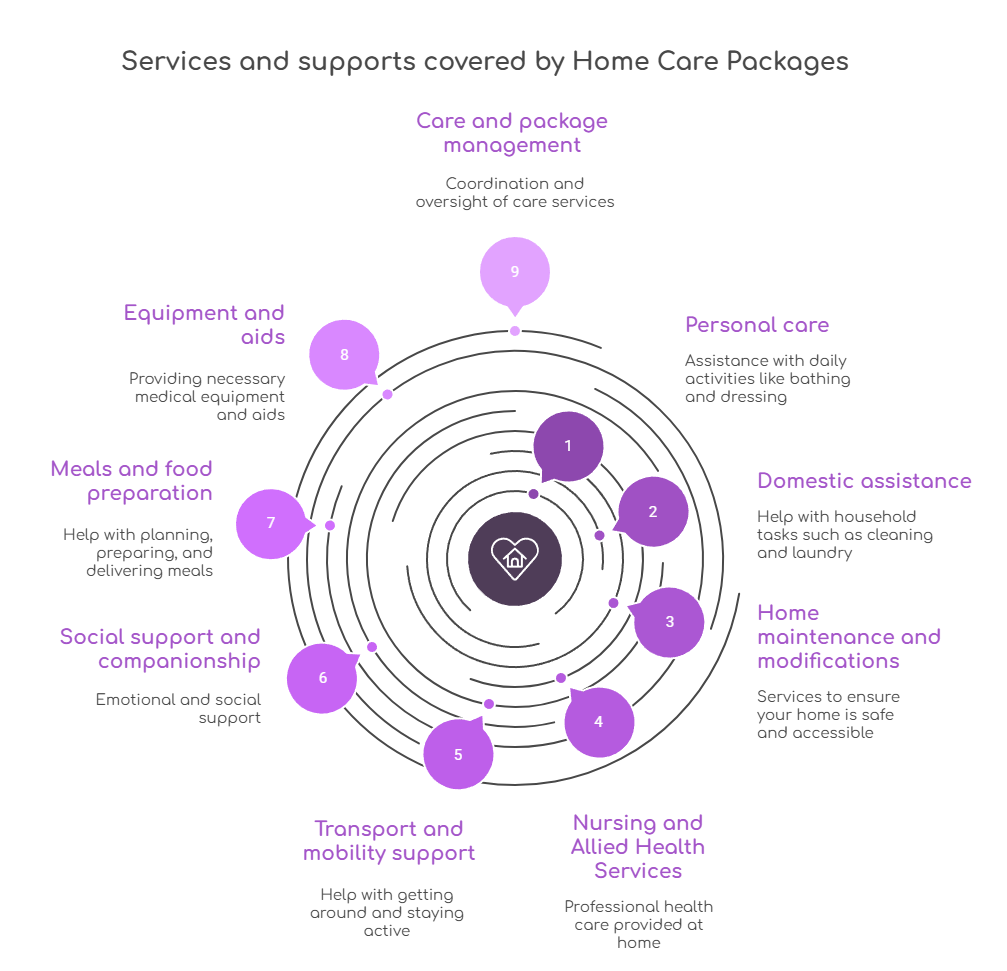
Here are the major categories:
Personal care
Help with daily living activities such as:
- Showering, dressing, and grooming
- Continence support and toileting
- Help with medications
These services maintain your dignity and well-being while supporting your independence.
Domestic assistance
Keeping your home clean and safe can be challenging as you age. Your package can fund:
- Cleaning, laundry, and ironing
- Meal preparation and kitchen tidying
- Light gardening for safety (e.g., clearing pathways)
Home maintenance and modifications
If your home environment needs adjustments to support mobility or safety, your package can fund:
- Installation of grab rails, handrails, or ramps
- Bathroom modifications (like walk-in showers)
- Repairs or adjustments that reduce fall risks
All modifications should be based on clinical recommendations or assessments.
Nursing and Allied Health Services
Professional clinical care is one of the most valuable aspects of your package. This includes:
- Nursing services: wound care, medication management, and health monitoring
- Allied health therapies: physiotherapy, occupational therapy, podiatry, speech therapy
Transport and mobility support
Transport can be funded when it relates to your care needs, such as:
- Travel to medical or allied health appointments
- Attendance at approved community or social activities
Social support and companionship
Maintaining social connections is vital for mental health. Package funds may cover:
- Visits from support workers or companions
- Help to join community activities or interest groups
- Short-term respite for family carers
Meals and food preparation
While the cost of ingredients is not covered, the preparation and delivery of meals can be funded if listed in your care plan.
Equipment and aids
Assistive equipment that promotes independence and mobility may include:
- Walkers, wheelchairs, or pressure cushions
- Shower chairs, commodes, or hoists
- Personal alarms and fall sensors
Care and package management
Your package can fund planning, coordination, and administration that keep your supports compliant and on track. This includes:
- Care planning and reviews
- Service coordination and scheduling
- Budgeting, monthly statements, and invoice processing
- Compliance reporting and quality oversight
What is not covered by your aged care package?
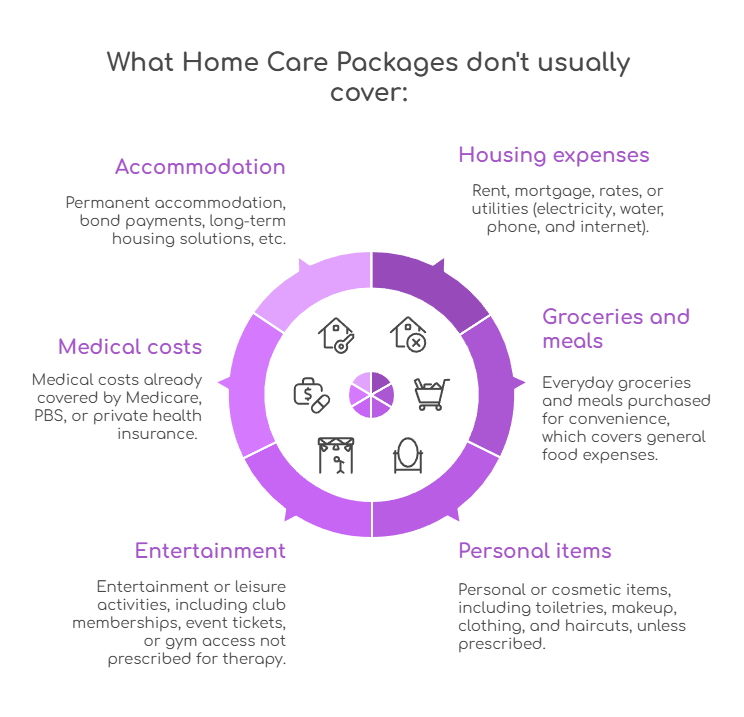
Not all expenses qualify. To stay compliant, it's essential to know what's excluded under government rules.
You cannot use your package for:
- Rent, mortgage payments, rates, or utilities (electricity, water, phone, internet)
- Everyday groceries or meals purchased for convenience
- Personal or cosmetic items (toiletries, makeup, clothing, haircuts) unless prescribed as part of care
- Entertainment or leisure activities (club memberships, event tickets, or gym access not prescribed for therapy)
- Medical costs already covered by Medicare, PBS, or private health insurance
- Permanent accommodation or bond payments
"Grey area" coverage
Some items fall into a middle zone and may be approved only if directly related to care needs.
When in doubt, always ask your provider.
Can I use my package for medication and other essentials?
Prescription medication is not covered under Home Care Packages. It falls under the Pharmaceutical Benefits Scheme (PBS).
Over-the-counter medication or supplements may sometimes be covered. But only if they're recommended by a health professional and documented in your care plan.
Other essentials like dental, optical, or hearing services are funded through separate programs. These may include Medicare or the Commonwealth Hearing Services Program.
Practical steps to use your package appropriately
Here's a quick list of how to make sure you're using your package funds correctly:
- Review your assessment and care plan regularly so your goals and supports match your current needs.
- Check with your provider before confirming eligibility and adding new items to your care plan.
- Seek clinical input when needed so therapies, equipment, or modifications are clearly justified.
- Get at least two quotes for higher-cost items to confirm scope, installation, and warranty.
- Trial equipment before purchasing to ensure fit, comfort, and function.
- Use approved, insured providers and trades to meet safety and compliance requirements.
- Keep thorough records, including assessments, approvals, quotes, invoices, and receipts.
- Review your monthly statements and query any charges you don't recognise.
- Plan your budget across the year to balance ongoing services with one-off purchases.
- Link transport and social activities to plan goals and keep a simple log if requested.
- Request a care-plan review when needs change after hospital stays, new diagnoses, or carer changes.
- Get "grey area" items confirmed in writing and included in your care plan before proceeding.
- Follow the agreed reimbursement process by submitting receipts promptly and checking credits appear.
- Raise concerns with your care manager early and ask for a review or second opinion if needed.
Program transition note
The Home Care Packages program will be replaced by the Support at Home Program from 1 November 2025.
There will be some changes made to the program, but your core services will continue.
Coverage still focuses on items that meet your assessed needs and appear in your plan. These will include:
- Personal care
- Domestic help
- Nursing
- Allied Health
- Transport to approved activities
- Social support
- Equipment and aids
- Home modification
- Care/package management
Support at Home also introduces targeted, time-limited pathways for specific needs, such as:
- Assistive technology and home modifications
- Short restorative therapy blocks
- End-of-life support
You will work with one provider who manages everything and makes sure all the funded items follow the rules and are approved by your plan.
Understanding your care budget with Sensible Care
Your Home Care Package is designed to help you live safely, comfortably, and independently at home. By understanding what you can and can't spend it on, and by working closely with a supportive provider, you can make every dollar count.
At Sensible Care, we take the guesswork out of aged care. Our friendly team helps you plan and manage your funding so you can focus on what truly matters - living your best life at home.
Ready to make your package work harder for you? Contact Sensible Care today to get started.

Take the Next Step in Care
Download our Info Kit or speak to one of our friendly team members today.


Explore More Helpful Reads
More stories, guides, and updates to support you and your family.


.webp)

Need Help Getting Started?
Reach out on your terms, pick a time that suits you and let’s talk about how we can help.


.webp)