.svg)

Commonwealth Home Support Programme vs. Home Care Packages (Support at Home)
Read this article to learn the differences between the Commonwealth Home Support Programme vs. Home Care Packages, now Support at Home.
Author: Sensible Care

The CHSP (Commonwealth Home Support Programme) is an entry-level program for older Australians who need a little help at home. It usually covers one or two services a week, like cleaning, transport, social support, or basic personal care. Home Care Packages have merged into the Support at Home program, which is for older people with higher or ongoing care needs. It can fund services like personal care, nursing, allied health, restorative care, and end-of-life support.
If you're considering aged care at home, it's helpful to know your options. There are two support programs for elderly Australians: the CHSP and Support at Home, formerly known as Home Care Packages.
The Commonwealth Home Support Programme (CHSP) is the entry-level pathway. It's for people who need a little help with day-to-day tasks at home.
Home Care Packages have now merged into the Support at Home program. This new program is for older Australians who need more regular, coordinated care.
This article explains the difference between these two aged care home programs. Read on to decide which one is better suited for you and your care needs.
The CHSP vs. HCPs — key differences
| Feature | Commonwealth Home Support Programme | Support at Home (Home Care Packages) |
|---|---|---|
| Purpose | Entry-level basic help for older people who need a little support to stay at home. | Coordinated, ongoing care for older people with higher or more complex needs. |
| Funding model | Service-by-service subsidy. | Packaged budgets based on classifications, with quarterly and annual budgets. |
| Services | Domestic help, transport, social support, and basic personal care. | Personal care, nursing, allied health, restorative care, assistive technology, home modifications, and end-of-life supports. |
| Costs | Small provider contributions based on one's ability to pay. | Income-based contributions for non-clinical care; clinical services are funded by the government; lifetime cap on non-clinical contributions. |
| Assessment/access | Accessed via My Aged Care assessment, with eligibility decided by assessment teams. | Accessed via My Aged Care, with eligibility decided by the Single Assessment System. |
What is the Commonwealth Home Support Programme (CHSP)?
The Commonwealth Home Support Programme (CHSP) is a government aged care program designed for older people who live at home. It aims to keep these individuals independent and connected to their community.
The CHSP provides entry-level support. That means it's for people who are mostly managing well, but need a hand with some daily tasks at home.
This program is grant-funded and delivered by local providers. Services are organised separately, rather than as a single care budget. This makes the CHSP flexible for occasional aged care needs.
CHSP services
The Commonwealth Home Support Programme can provide practical help, which may include:
- Domestic help (cleaning and laundry)
- Shopping help and transport
- Social support and group activities
- Basic personal care
- Meals
- Simple nursing
- Temporary respite or day programs
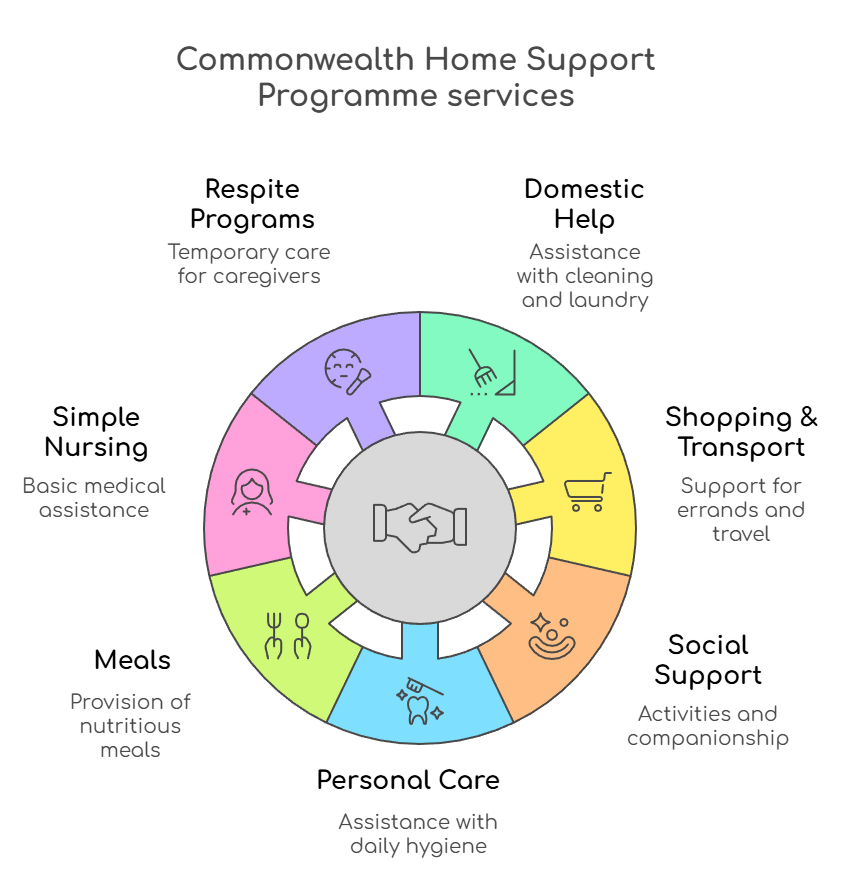
People often use the CHSP to stay on top of routine tasks. For example, weekly cleaning can reduce fall risks, while social outings can help with loneliness.
This type of support is usually for those with basic to low-level care needs. Many clients receive one or two service types per week.
CHSP eligibility
CHSP is typically for people who are:
- 65 years or older
- 50 years or older for Aboriginal and Torres Strait Islander people
- Aged 50 or older and homeless or at risk of homelessness
These age guidelines help identify who the program is designed to support. But age alone doesn't automatically make someone eligible. Support needs also matter.
You must also have an assessment that confirms you need low-level (entry-level) support. This means you may need help with things like everyday tasks, safety around the home, or occasional personal support. But this doesn't apply to high ongoing care needs.
Many people start with CHSP when their needs are still small. If your situation changes over time, you can request another assessment. You may then move to a higher level of support (like Support at Home) if it becomes more appropriate.
CHSP costs
The Commonwealth Home Support Programme services are partially funded by the Australian Government. This means the government covers most of the cost, and you only pay a small amount as a contribution.
Your contribution is set by the service provider (the organisation delivering your support). It's usually referred to as a "client contribution" or "co-contribution." This isn't a full-price fee, but a modest amount to help cover expenses while the government pays the bulk.
How much you pay depends on:
- The type of service you receive (for example, cleaning, meals, transport, or personal care)
- Which provider you use, because providers can set slightly different contribution amounts
Even though fees vary, they are expected to stay low. The CHSP is designed as a low-intensity support program, meaning it offers basic help to keep you living independently, without high out-of-pocket costs.
What is Support at Home?
Support at Home is Australia's new home care program for people with higher support needs. It replaced Home Care Packages and the Short-Term Restorative Care (STRC) program on 1 November 2025.
Support at Home is for people who need regular, ongoing help. This care often involves more than one service. Support is organised through a single care plan and a set budget.
The program has clearer support levels than before. It uses eight classifications based on your assessed needs. Each classification comes with its own budget for approved services.
Support at Home includes the following:
- A classification matched to your level of need
- A funded care budget
- A care plan that lists approved services
- Rules that separate clinical and non-clinical care
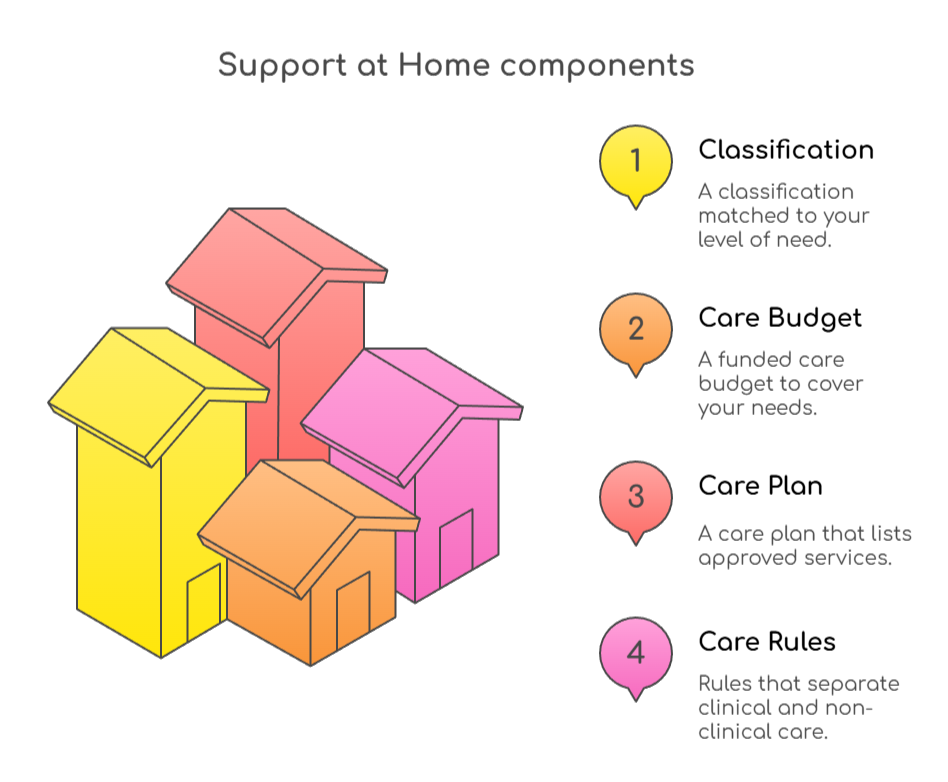
This program also offers short-term pathways, which include:
- Restorative care
- Assistive technology and home modifications (AT-HM)
- End-of-life support
These are designed for specific goals or situations, such as recovery after illness or extra help during a change in circumstances.
Support at Home services
Support at Home can cover a broader set of services than the CHSP. This is because it's intended for higher needs.
Support at Home services may include:
- Coordinated personal care, including daily support if needed
- In-home nursing
- Allied health, like physiotherapy and occupational therapy
- Restorative care programs
- Assistive technology and home modifications
- End-of-life support
Support is delivered as a coordinated package. This means services are planned together under one care plan and budget, helping reduce gaps and making care easier to manage.
Support at Home eligibility
Support at Home is for older people who need ongoing or higher-level support at home. It's the pathway that Home Care Packages have moved into.
You cannot apply directly through a provider. Instead, you start with My Aged Care's assessment under the new Single Assessment System. This is one national process designed to avoid repeat assessments as needs change.
During assessment, the assessor looks at your:
- Daily living needs
- Health
- Mobility
- Memory issues
- How often you need help
- Whether your needs are complex or long-term
If you are approved, you will be placed into one of eight Support at Home classifications, which determines your budget and care plan.
You can begin services once funding is available, and you can be reassessed later if your needs increase.
Support at Home costs
Support at Home splits services into clinical and non-clinical care. Clinical care, including nursing and other health services, is fully funded by the government. You don't have to pay a contribution for those supports.
Non-clinical services, like personal care, domestic help, or transport, may involve an income-based contribution. How much you pay depends on your financial situation, and your provider will explain what applies to you.
To keep costs fair over time, there is a lifetime cap on contributions for non-clinical care. As of 20 September 2026, the lifetime cap is $140,652.80 (indexed twice yearly on 20 March and 20 September).
Once you reach this amount in total contributions for non-clinical services, you will not be charged any further contributions. This cap applies to both Support at Home and residential aged care combined.
Providers are required to publish their fees and expected contributions. This makes pricing more transparent, allowing you to compare providers before making a choice.
How to choose the right program for your needs
Choosing the right program mostly comes down to:
- How much help you need now
- How complex that help is
- Whether your needs are likely to grow
Here's how to decide which aged care program is better for you.
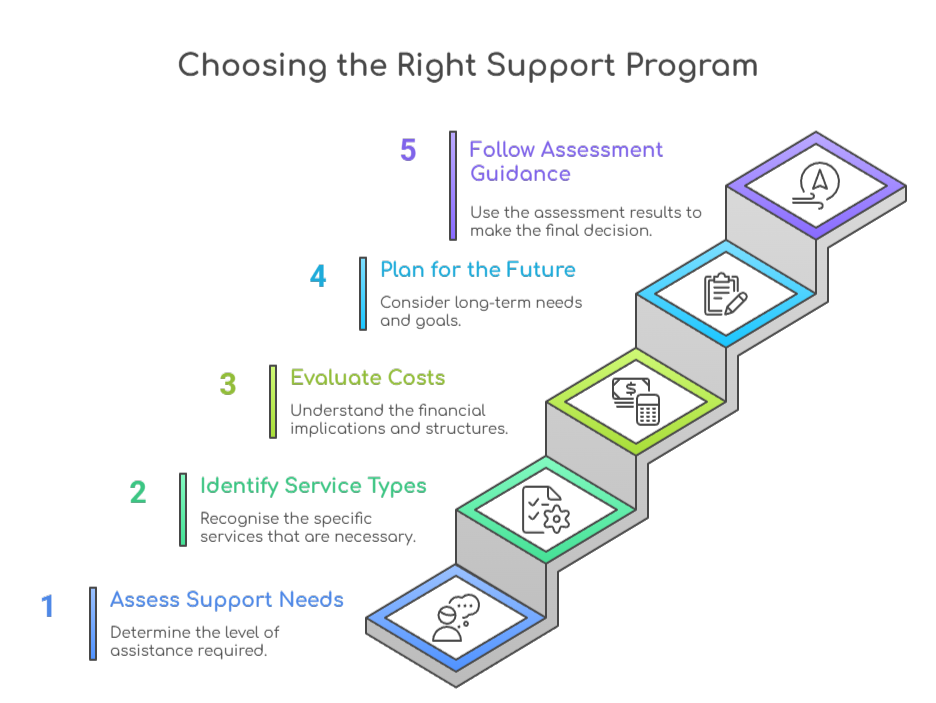
Think about the level of support you need
CHSP is best if your needs are low and fairly simple.
It's designed as entry-level support for people who need just one or two services to stay safe and independent at home. For example, cleaning, meals, transport, and small home maintenance.
Support at Home is best if your needs are higher or more ongoing.
It's intended for people who need regular care, often from many services, coordinated under one plan and budget. It has eight funding classifications matched to assessed need.
Look at the types of services you need
CHSP covers basic, low-intensity supports. If what you need is mainly practical day-to-day help, CHSP is usually the right fit.
Support at Home offers a broader and more clinical range of services. If you need things like ongoing personal care, nursing, allied health, or restorative care, Support at Home is more suitable.
Consider costs and how they're structured
For the CHSP, you pay a small client contribution set by your provider. The program is meant to stay modest.
When it comes to Support at Home:
- Clinical care is fully government-funded (no contribution).
- Non-clinical care may involve income-based contributions, and there is a lifetime cap to protect long-term clients.
- Providers must publish their fees, so you can compare options.
So if cost predictability matters:
- CHSP = smaller, simpler contributions
- Support at Home = contributions depend on income, but clinical care is free, and lifetime caps apply
Think about the future, not just today
If your needs are low now but likely to increase, starting with CHSP is fine. It can be a stepping-stone while you monitor your situation. You can be reassessed later if your needs grow.
And remember that CHSP isn't transitioning into Support at Home until at least mid-2027. But current CHSP clients can keep using it normally in the meantime.
Let the assessment guide the final choice
You don't have to decide alone. My Aged Care assessments determine which program matches your needs.
- People with lower, simpler needs are usually directed to CHSP.
- People with higher or more complex needs are usually directed to Support at Home classifications.
If the assessment outcome doesn't feel right, you can ask questions or request a review.
Quick decision checklist
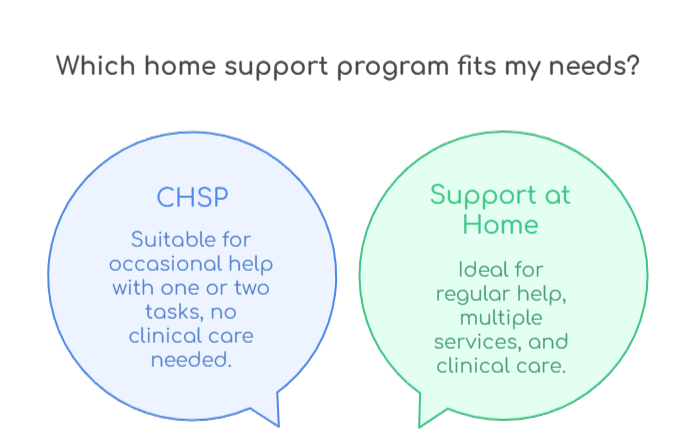
You'll usually fit CHSP if you:
- Need help with one or two tasks
- Need support occasionally, not every day
- Don't need regular clinical care
You'll usually fit Support at Home if you:
- Need regular or daily help
- Need several services working together
- Have higher or changing care needs
- Need clinical supports like nursing or allied health
Important: Transition for CHSP clients
In two years, you won't be able to choose between these two programs because the CHSP will merge into Support at Home.
The Australian Government has extended CHSP funding and policy settings through 30 June 2027. So, the program will continue to operate as normal during this period.
The CHSP will not be moving into Support at Home straight away. Instead, the transition will happen in stages, and no earlier than 1 July 2027 for most CHSP services and pathways.
This timing is intended to allow providers time to adjust their systems and minimise disruptions for clients.
What this means for you is simple: if you are currently receiving CHSP services, you will keep receiving them as usual.
Your services, provider arrangements, and contribution model will continue under CHSP during the program's extension period. You don't need to reapply just because Support at Home has begun for higher-needs clients.
When changes do arrive, they should not happen suddenly. The government has said clients must be supported through the transition. Providers are expected to clearly explain:
- What is changing
- When it will change
- Whether your assessment or care plan needs updating
- What your options are if your needs increase
Planning with confidence
The CHSP and Support at Home are built for different levels of need. That difference remains clear even after the reforms.
The CHSP supports small, entry-level help at home. Support at Home supports higher, ongoing, coordinated care.
If you're unsure where you fit, start with My Aged Care. Then speak with a trusted provider, like Sensible Care, about next steps.
Contact our team to understand your options and build a plan that keeps you safe at home for longer.
These amounts are set by the Australian Government and change at least twice a year. Check health.gov.au for the current amounts before you make a decision.

Take the Next Step in Care
Download our Info Kit or speak to one of our friendly team members today.


Explore More Helpful Reads
More stories, guides, and updates to support you and your family.


.webp)

Need Help Getting Started?
Reach out on your terms, pick a time that suits you and let’s talk about how we can help.


.webp)