.svg)

How do you know if you need respite support?
Read this article to recognise the signs you and your elderly loved one would benefit from respite support, and how you can access it through aged care.
Author: Sensible Care

You likely need respite care if caring for your aged loved one is starting to affect your health, mood, sleep, or safety. If your caregiving responsibilities are making you exhausted, you can arrange different types and lengths of respite care. Emergency respite care is also an option when something unexpected happens to you or your circumstances. You can access respite care through My Aged Care (including the Support at Home program). You can also use NDIS funding if you’re eligible or organise private help to fill gaps.
There might come a time when you simply can't handle the stress that comes with caring for someone. After all, it's a 24-7 job.
This is where respite comes in. This type of support exists so that caring for loved ones is not only possible, but safe. It lets you take a well-deserved break while your loved one gets the care they need.
But when is the right time to seek this type of help? This article helps you spot the signs earlier, before things get too difficult.
Keep on reading to learn more about respite care, what it looks like, how to access it, and how it can help you.
What is respite care, and who is it for?
Respite care is short-term support that gives a carer a break. While you, the caregiver, take a step back from your responsibilities, the person receiving care stays supported.
The purpose is simple: protect the well-being and safety of both sides. A break taken early is easier than a crisis managed later.
Respite care is for two people at once: the person who provides care and the person who receives it.
It's for carers who:
- Provide regular unpaid care for a partner, parent, child, or friend
- Feel stretched, exhausted, or on edge
- Need time for sleep, work, appointments, or other family responsibilities
- Want a planned break before things reach a crisis point
Respite care is also for people who receive care, who:
- Need support with daily tasks, supervision, mobility, or personal care
- Benefit from consistent routines and safe support when the primary carer steps away
- May enjoy social connection, activities, or a change of pace, depending on preferences
Signs you may need respite care
If you're still not sure if respite care is for you, here are some signs to look out for:
- Your body is sending warnings
- Your mood is changing
- Your thinking feels slower
- You find it difficult to keep up with your day-to-day tasks
- There is more and more conflict
- Care needs have changed
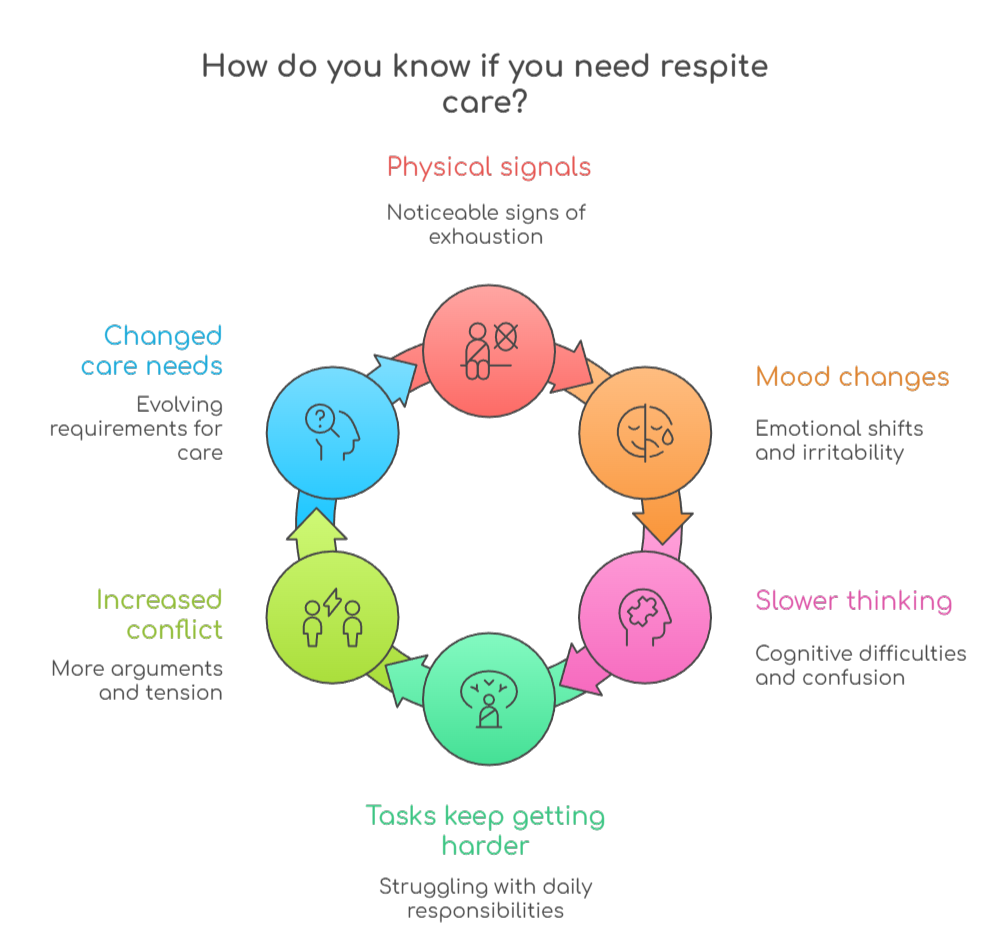
Before you even realise you’re mentally exhausted, you'll feel the physical symptoms. Poor sleep, low immunity, and even pain here and there might signal it's time to take a break. You may get sick more often than usual, but you're too busy to fully recover.
Many carers become more irritable when they work too long or too often. You might suddenly snap, then feel guilty. It's all normal if you're burned out.
Fatigue can affect memory, attention, and judgment, leading to mistakes, even with good intentions. You might lose track of meds, meals, or appointments, or even struggle to make simple decisions.
Taking care of others means you don't have time to do the things you want to do. There is no time for exercising, shopping, or seeing people. Not only that, but you find yourself cancelling plans more than you'd like to admit.
Stress can also raise tension at home. You may argue more with family, the person you support, or other helpers.
Respite care may also be helpful when care needs change. Your loved one might need more care after a fall, a hospital stay, or a health decline.
Changes in dementia patterns can also affect supervision needs. Your loved one might need more personal care, night support, and constant supervision.
Different forms of respite care
Now that you know if respite care is for you, you need to figure out what type of respite will benefit you the most.
Here are the different types of respite care available in Australia:
- In-home respite
- Social or community respite
- Centre-based day respite
- Overnight or weekend respite
- Short stays in a facility
- Emergency respite
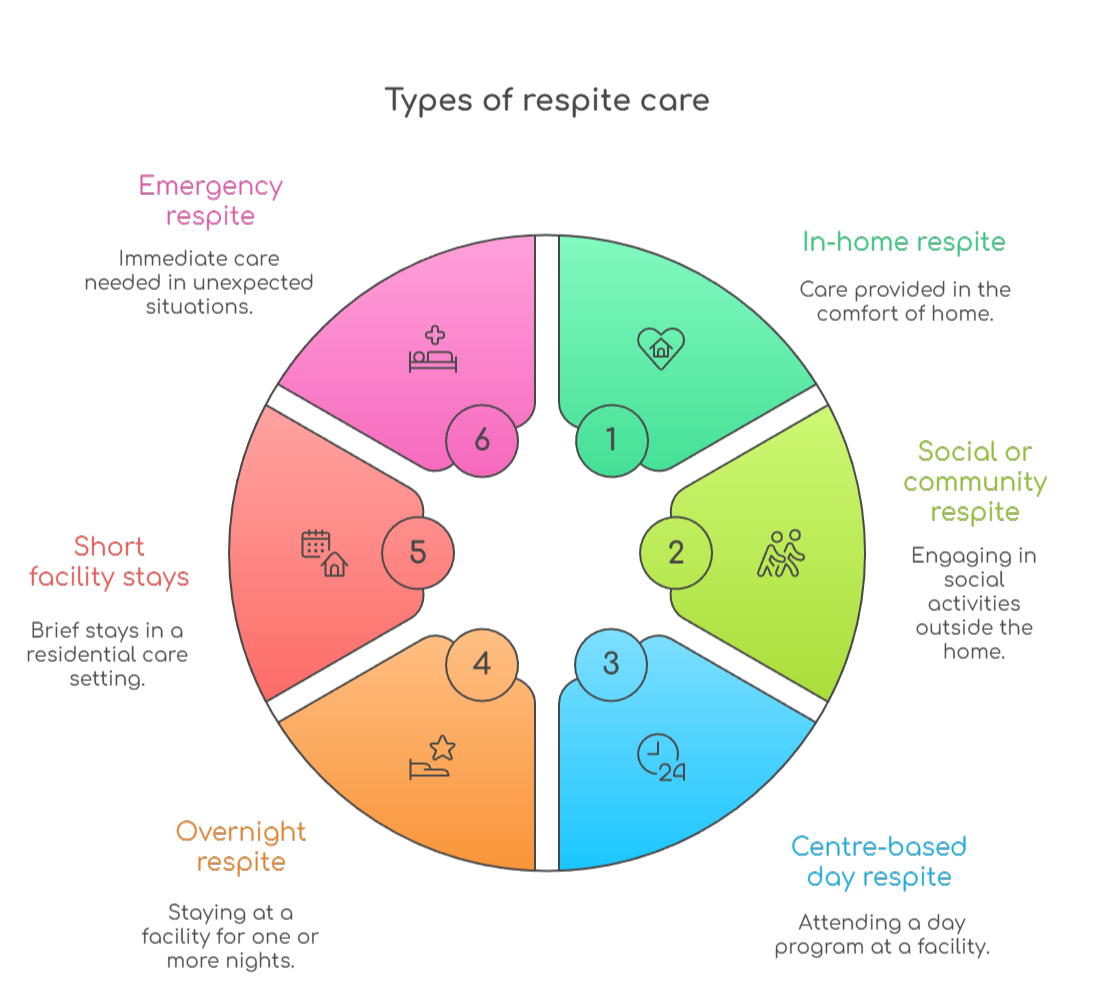
With in-home respite, a worker comes to your home to provide support. In the meantime, you get time to sleep, rest, shop, or attend appointments. In-home respite is often good for people who prefer familiar routines or those who have mobility or sensory needs.
When it comes to social or community respite, it takes place in the community. It may include a walk, a cafe visit, shopping, or an activity. It can help make the person less lonely and isolated, so you won't have to feel guilty about taking time off.
Centre-based day respite involves attending a day program, which often includes activities, meals, and social contact. This option is great because it gives carers a solid block of time. It can also help the person receiving care build a routine.
Overnight or weekend respite happens at night or during a weekend, as the name implies. It can happen at home or in a short-stay setting. It's ideal for carers who manage night wandering or night anxiety.
Respite can include a short stay in a residential setting. This type of support is for carers who need a longer break, and it's especially useful where home support isn't enough.
Emergency respite is for sudden disruptions, like carer illness, hospitalisation, or a crisis at home. It may use some of the same residential respite days that are available for planned breaks.
It's not always possible to arrange emergency respite immediately. It helps to know your local options and ask about them early.
What are the benefits of respite care for carers?
Respite care is designed to help carers in many shapes and forms. Here are the benefits:
- More time for sleep and recovery
- Reduced stress and emotional load
- More time for appointments, work, and family tasks
- Fewer mistakes from fatigue
- Being able to maintain a more sustainable caring routine
- Better boundaries and less guilt
- More patience and fewer conflicts at home
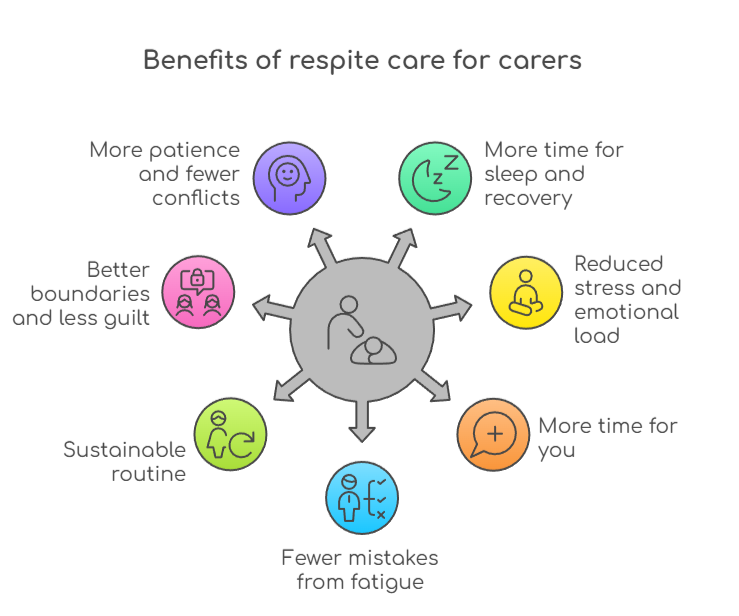
Getting more sleep is often the most important advantage for caregivers. One uninterrupted night of rest can reduce headaches, tension, and brain fog.
You'll have more time to recover, which benefits both physical and mental health. Longer recovery times lower the risk of strain injuries from lifting, transfers, or rushed physical tasks.
Naturally, you'll be less stressed when you know a reliable professional is taking care of your loved one. You get space to reset, not just push through, which also reduces the emotional load of caregiving.
With respite care, you have more time for your own life. You can use this time to go to appointments, or just exercise, run errands, and focus on yourself for a little bit.
Fatigue-related mistakes become less likely when you are well-rested. This is so important for medication reminders, meal routines, and safe supervision.
Respite makes caring sustainable. With renewed focus, you will be able to maintain your caregiving routine in the long term.
Another advantage of respite care for carers is the reduced feeling of guilt. When breaks are planned, caring becomes a shared system, not a solo burden.
Resting even for a little while can improve patience. This can help you respond more calmly, which means there will be less conflict in the house.
What are the benefits of respite care for care recipients?
Respite care isn't only for carers, but those receiving care as well. Here are the benefits for care recipients:
- A calmer home environment
- More social contact and stimulation
- Reduced isolation and improved mood
- Support from trained staff
- More consistent routines, even when the carer is exhausted
- Increased comfort with care from someone outside the family
- More choice in activities and daily structure
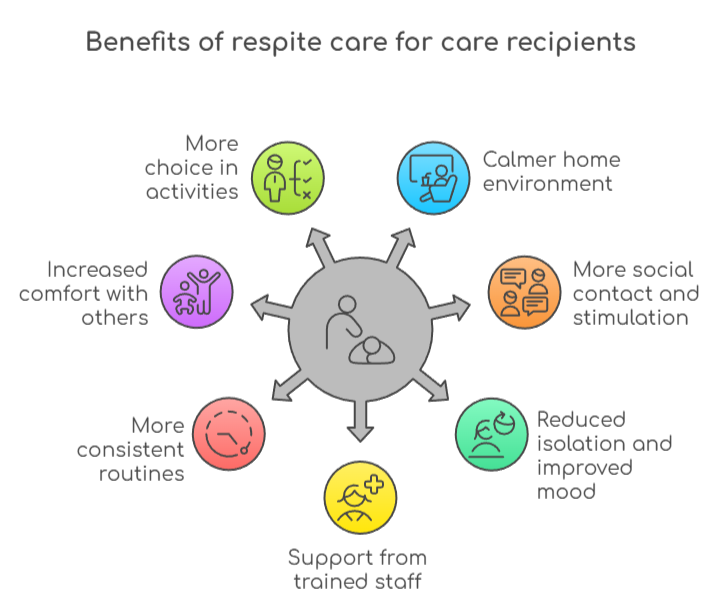
Through respite care, the home environment becomes much calmer. Planned breaks reduce tension and rush. When carers return rested, the home often feels steadier and more predictable.
Care recipients also benefit from fresh interaction. A new support provider may bring a different pace, which leads to more conversation.
More social opportunities can improve mood. Even small outings or shared activities can make the person less lonely or bored.
Respite support comes from reliable, trained professionals. The support they provide can include mobility help, personal care, and supervision, based on needs.
Respite can also lead to more consistent routines. Meals, hygiene, and medication prompts stay on track when coverage is planned.
This type of care can build comfort with support outside the family. That matters if needs increase or if family carers become unwell.
Respite can add variety without chaos. The person can choose activities that suit their interests, energy, and preferences.
Aged care vs NDIS: Which option is better?
Some families use aged care pathways, while others use NDIS supports, private services, or a mix. The key difference is what funding, eligibility, and services apply to your situation.
Start with the person’s age. In most cases, people aged 65+ access support through the aged care system rather than the NDIS.
Aged care support usually begins through My Aged Care. The assessment confirms eligibility, care needs, and which services (including respite) can be funded.
NDIS support is generally for people under 65 with a permanent and significant disability. The focus is on disability-related supports and goals.
NDIS funding is based on disability‑related supports and goals in the person’s NDIS plan. This can include short‑term accommodation and respite.
If you support an older person, start by thinking "aged care first". It's the most common pathway, and it's designed for ageing-related needs.
If disability support applies under the NDIS, use that plan where it fits. The plan may fund supports that reduce carer load in practical ways.
Some situations involve both systems. For example, a person may have an NDIS plan before 65, then later move into aged care supports. In that case, keep the focus on outcomes, not programs.
Private services can fill gaps in any pathway. People often use private respite when funded options are limited or slow.
Knowing when it's time to let someone help
Respite supports your health, your safety, and your ability to keep caring. It also supports the person you love by keeping routines steady.
If you are seeing the signs, act early. A small break now is easier than a crisis later.
If you want respite that fits your situation, Sensible Care can help you map the simplest next step. We can talk through options, match support to your needs, and help you start with a calm trial.
Contact us for more information.

Take the Next Step in Care
Download our Info Kit or speak to one of our friendly team members today.


Explore More Helpful Reads
More stories, guides, and updates to support you and your family.




Need Help Getting Started?
Reach out on your terms, pick a time that suits you and let’s talk about how we can help.


.webp)